
What's on · Wed 25 Nov 2026
Ipoh: the tin town that eats best in Malaysia
Ipoh got rich on tin, lost the tin, and kept the food. The Perak capital two hours north of Kuala Lumpur by train is where Malaysians themselves travel to eat: white coffee in the kopitiam that claims to have invented it, bean sprout chicken, silken chicken noodle soup and salt baked chicken, served in an old town of miners' clubs and colonial facades under limestone hills. The story of the boom, and how to eat the town in a day.
Ask Malaysians where they travel inside their own country purely to eat, and one name comes back more than any other: Ipoh. Not the capital, not the islands, but a former mining city in Perak, two hours north of Kuala Lumpur by train, sitting in a valley of limestone hills on the Kinta River. Ipoh's reputation rests on a simple claim that nobody seriously contests: ingredient for ingredient and kopitiam for kopitiam, it eats better than anywhere else in Malaysia. This guide explains how that happened, because the food only makes sense with the tin, and then walks the eating itself, which is the real itinerary. Seasonal listings for Perak sit on our events calendar; the food, fortunately, is not seasonal.
The town built on tin
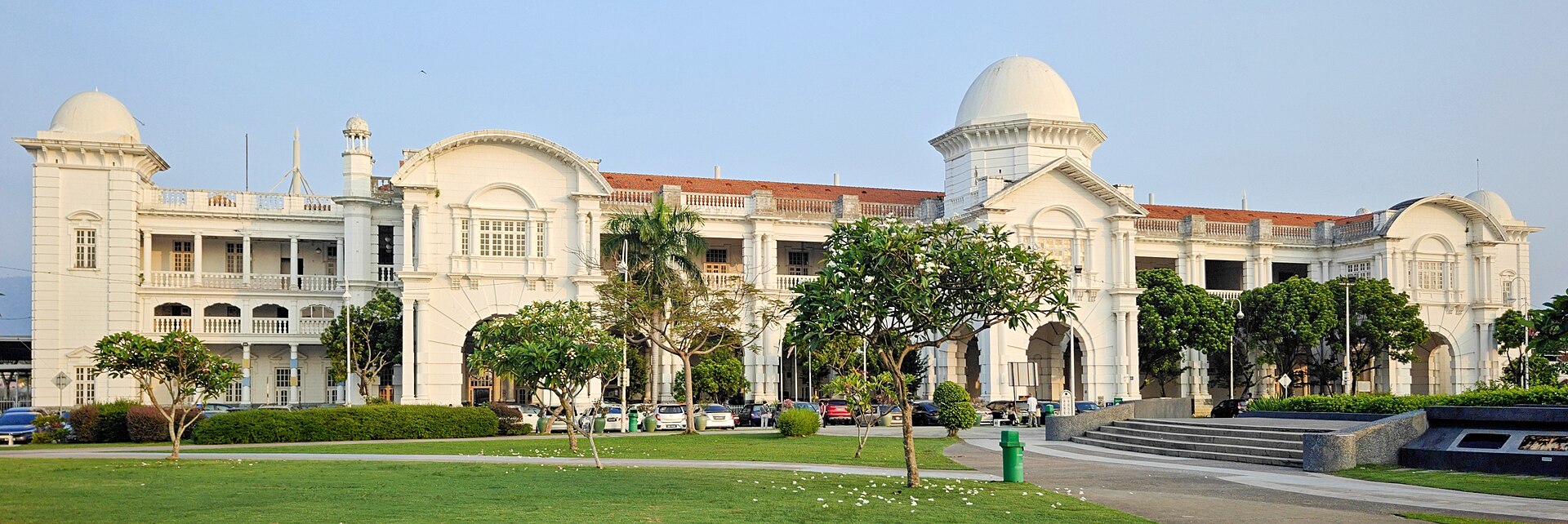
Ipoh exists because of what was in the ground around it. Alluvial tin was found in the Kinta Valley in the 1870s, and through the 1880s the valley became one of the richest tin fields on earth. Miners, merchants and mining companies poured in, most of them Chinese, many of them Hakka, and a riverside settlement turned into a boomtown of godowns, theatres, clubs and shophouses. The money was serious enough to earn Ipoh its enduring nickname, the City of Millionaires, and by the middle of the twentieth century, at the industry's peak in the 1950s, this was one of the wealthiest towns in Malaya. The architecture still shows it: the railway station, designed by Arthur Benison Hubback and completed in 1917, a white domed palace of a building nicknamed the Taj Mahal of Ipoh; the town hall and court buildings around it; and Han Chin Pet Soo on Jalan Bijeh Timah, founded in 1893 as the Hakka Tin Miners' Club, now a museum that tells the boom from inside the clubhouse where the miners gambled, smoked and did their deals.
Then, in October 1985, the world tin price collapsed, and the mines closed almost at once. Ipoh spent years as a byword for a town whose reason had left. What saved it was what the boom had built and fed. The city had been declared a city in May 1988, the old town's fabric survived largely intact because there was no money to demolish it, and the kopitiams never stopped cooking for the people who stayed. When domestic tourism came looking for heritage and food, Ipoh had both, unrenovated and unbothered.
Why the food is this good
The local explanation starts with the water. Ipoh's supply filters through the limestone hills that ring the city, and cooks credit that mineral water for the two textures the town is famous for: bean sprouts that grow short, fat and crunchy, and rice noodles of a particular silkiness. Whether or not the chemistry carries the whole argument, the results are on every table. The other half of the explanation is the boom itself: a rich, competitive, mostly Chinese mining town with money to spend on eating well and generations of cooks competing street by street. Standards set in the 1920s got defended for a century.
The canon, in the order an Ipoh local would insist you meet it. Nga choy kai, bean sprout chicken: poached chicken with those fat bean sprouts, blanched seconds in seasoned stock, soy and sesame oil, the dish that defines the town. Kai see hor fun: flat rice noodles in a prawn and chicken broth with shredded chicken and chives, the soup the water argument was invented for. White coffee: coffee beans roasted with palm oil margarine, brewed strong and served with condensed milk, a style Ipoh originated and exported to the world; the old town kopitiams around Jalan Bandar Timah, Sin Yoon Loong among them, trading since 1937 and one of the names attached to the drink's origin, still pour it in the room where the habit started. Salt baked chicken, wrapped in paper and buried in heated salt, sold whole to take away. Heong pang, the flaky fragrant biscuits from the bakeries of Gunung Rapat, and Tambun pomelos, the grapefruit's sweeter cousin, grown in the limestone soil north of town and sold at roadside stalls piled like cannonballs.
Eating the town in a day
The train makes the day trip easy: KTM's ETS services run from KL Sentral to that palace of a station, and the old town's eating starts a short walk from the platform. But Ipoh food runs on kopitiam hours, which means the serious eating is front loaded. Breakfast is the main event: white coffee and kaya toast, then dim sum or curry noodles in a second sitting, because nobody in Ipoh eats one breakfast. Late morning is for the old town walk, the miners' club museum, Concubine Lane with its boutiques and dessert stalls, the street art and the shophouses, building the appetite back up. Lunch is bean sprout chicken, non-negotiable. The afternoon belongs to the takeaway economy: salt baked chicken, heong pang, pomelos for the train. Stay the night and the pattern improves again, because the morning market and a second breakfast are Ipoh's home ground, and the town's newer cafes and the limestone temple caves on its edge, Perak Cave Temple among them, fill a second day without strain.
Stay in Ipohvia Trip.com · affiliate link
The honest limits
Ipoh on a weekend is Ipoh besieged: the famous kopitiams queue out the door, prices in the old town have crept up with fame, and some beloved names now run on reputation and volume. Go on a weekday if you can, arrive hungry, order the canon first and the novelties second, and do not judge the town by its single most famous chicken rice shop at one o'clock on a Saturday. Judged fairly, on a Tuesday morning with a white coffee in hand, Ipoh's claim is not nostalgia. It is lunch.
The limestone edge of town
Ipoh's hills are not scenery; they are ingredients and addresses. The same limestone that flavours the water holds the city's cave temples, where Chinese temples were built inside caverns at the cliff bases from the nineteenth century onward. Sam Poh Tong, south of the old town, is the best known, a temple garden of ponds and pavilions behind a cliff face you pass through into a hidden valley. Perak Cave Temple, to the north, climbs its hill in stairways of shrines and murals with a view over the city from the top. Both sit a short drive from the centre, both are working temples rather than exhibits, and together they make the case that Ipoh's second day writes itself: caves in the cool of the morning, a second round of the canon at lunch, and no decisions harder than which kopitiam.
The coffee, meanwhile, left town and conquered the region. The white coffee style born in these kopitiams became one of Malaysia's signature exports, packaged and franchised across Asia, and Ipoh wears that the way a wine town wears its famous chateau: with pride, and with a mild insistence that the original rooms still do it better. They have a point. A white coffee in a tiled, ceiling-fanned old town kopitiam, with the toast arriving on a saucer and the regulars reading the paper at the next marble table, is a different drink from the same recipe anywhere else, because half of it is the room. That is the whole Ipoh argument in miniature. The town's genius was never invention alone. It was keeping the room, the recipe and the water exactly as they were, while the tin, the millionaires and the century moved on.
Practicalities, briefly, because the eating will not wait. The old town is flat and walkable end to end, the station sits at its western edge, and the famous names cluster within a few streets of each other, which is what makes the multi breakfast strategy physically possible. Ride hailing covers the cave temples and the Gunung Rapat bakeries. Nothing in the canon requires booking, only arriving before the dish sells out, which by late morning, on the famous ones, it does.
More reading on the articles page, or go straight to the events calendar.
Noteworthy events direct to your inbox.
Get what’s noteworthy for the weekend and beyond every Wednesday in your inbox.