
What's on · Sat 21 Nov 2026
Penang in two days: George Town's heritage and food, street by street
Two days is the Penang trip most people actually take, and George Town rewards it if you walk it in the right order: the UNESCO core street by street, the clan jetties and the Blue Mansion, the hill and the great temple at Air Itam held for the second morning, and the food treated as the itinerary rather than a break from it. The standalone George Town guide, with no Kuala Lumpur leg and no December framing.
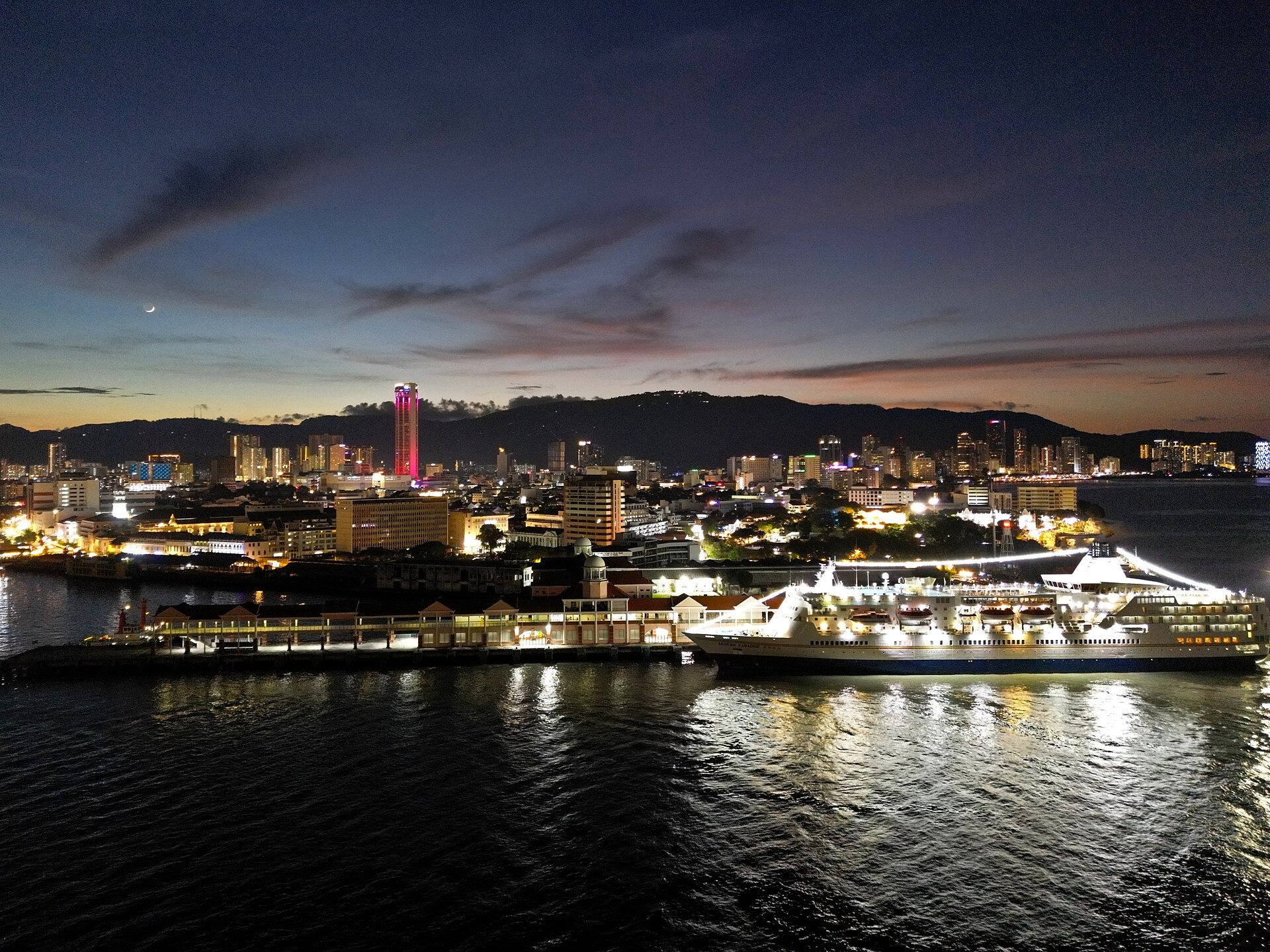
Penang gets two kinds of visit. One is a beach resort week that dips into George Town for an afternoon. The other, the better one, is two full days based inside the old town itself, walking. This guide is for the second kind. It assumes you sleep in or beside the heritage core, it treats the food as the main event rather than fuel, and it holds the island's two big outings, Penang Hill and Kek Lok Si, for the morning when you have already learned the streets below them. It is a standalone Penang piece: no capital city pairing, no festive season framing, just the town, street by street. For what is on while you are there, our events calendar carries the island's confirmed listings.
Why George Town works on foot
On 7 July 2008 UNESCO inscribed Melaka and George Town together as the Historic Cities of the Straits of Malacca, recognising two trading ports that grew over 500 years of exchange between East and West. George Town is the British era half of that pairing: a free port founded in 1786 under Francis Light of the East India Company, built out by Malay, Chinese, Indian, Arab and European merchants who settled street by street and, crucially, stayed. The inscribed site is compact and still lived in. George Town World Heritage Incorporated, the body that manages it, counts a core zone of 109.38 hectares and a buffer zone of 150.04 hectares holding 5,013 buildings in total, shophouses that are still homes and workshops, and 37 places of worship still functioning inside the zones. That is the point to hold onto for two days. You are not visiting a preserved quarter. You are walking a working town whose ordinary buildings happen to be protected, which is why the eating, the trading and the praying all happen in the same streets as the sightseeing.
Day one, morning: the civic shore and Harmony Street
Start at the sea, where the town started. The Esplanade, the Padang Kota, gives you the civic George Town in one sweep: Fort Cornwallis at the point, where Light landed, City Hall and Town Hall along the waterfront, the clock tower a short walk south. From there, turn inland onto Jalan Masjid Kapitan Keling, the street everyone calls Harmony Street, and walk the most concentrated lesson in the town's makeup. Along this one road and its immediate corners stand the Kapitan Keling Mosque, the Goddess of Mercy Temple, the Sri Mahamariamman Temple and St George's Church, mosque, Chinese temple, Hindu temple and Anglican church within a few minutes of each other, each still in daily use. GTWHI singles this street out for exactly that coexistence, and no guided summary improves on simply walking it slowly, in order, before the heat builds.
Drop south from there into Little India, around Lebuh Chulia, Lebuh Queen and Jalan Masjid Kapitan Keling's lower end, for the spice shops, flower garlands and textile houses, and take breakfast the Penang way if you have not already: roti canai or a nasi kandar plate, about which much more below.
Day one, afternoon: Armenian Street, the jetties and the mansions
Give the hot middle of the day to the streets that made George Town famous a second time. Lebuh Armenian and its neighbours, Lebuh Cannon, Lebuh Acheh and Jalan Masjid Kapitan Keling's heritage stretch, hold the clan houses, the mosques and temples between the shophouses, and the street art trail. The murals began in 2012, when the Lithuanian artist Ernest Zacharevic painted a set of site specific works for the George Town Festival, of which Little Children on a Bicycle, on Armenian Street, a painting wrapped around a real bicycle, became the town's most photographed wall. The trail now mixes those murals with the older steel rod caricatures that retell street history in outline. Walk it as a wander rather than a checklist, and go back at the end of the day if a wall was queued out at noon: the same streets at six in the evening are a different and better experience.
At the waterfront end of the old town, along Pengkalan Weld, the clan jetties carry the town's story out over the water. Each jetty is a village on stilts built by a Chinese clan and named for its surname, Chew Jetty the longest and best known, with a main plank walkway, houses on both sides and the strait at the end of it. Go late in the afternoon, when residents are home and the light is on the water, and walk it as a guest in a neighbourhood, because that is what it is.
The mansion hour belongs to Cheong Fatt Tze's Blue Mansion on Lebuh Leith, the indigo blue house built at the end of the 19th century for one of the richest merchants in the region, now a heritage hotel whose rooms and courtyards are seen properly on its own guided tours, which run daily. Book the tour rather than peering through the gate: it is the single best hour of domestic architecture in the town.
Book the Blue Mansion guided tourvia Viator · affiliate link
The food is the itinerary
Penang's reputation is not hype, and two days is enough to eat seriously if you assign each meal a job. Penang Global Tourism's own food material leads with the same three names every local list leads with, and they are the right three. Assam laksa is the signature bowl: thick rice noodles in a sour, spicy fish broth built on mackerel and tamarind, with pineapple, cucumber, mint and torch ginger over the top, sharp enough to reset a palate in one spoonful. The famous ground for it is Air Itam, at the foot of the Kek Lok Si hill, which is why this guide pairs the bowl with the temple on day two. Char koay teow is the wok test: flat rice noodles fried hard over fierce heat, charcoal at the best stalls, with prawns, cockles, egg, bean sprouts and chives, the Penang version the national benchmark. Nasi kandar is the rice institution: steamed rice flooded, and the flooding is the point, with a mix of curries chosen at the counter, a tradition built by Indian Muslim traders who once carried their pots through these streets on a shoulder pole, the kandar that gives the dish its name. Hameediyah, on Lebuh Campbell, trading since 1907, is the historic room for it.
Around those three, fill the gaps the local way: hokkien mee, the prawn broth noodle soup, for breakfast; rojak and cendol, the shaved ice dessert with green rice flour jelly and palm sugar, in the afternoon heat; and a Nyonya dinner one of the two nights, the Peranakan cooking that belongs to this coast, all sourness, spice paste and patience. Eat where the queue is local, order one dish per stall rather than three, and never skip a meal to save room: in Penang, the next meal is the plan, not the problem.
If you would rather have the eating organised for you once, the small group food tour built for this town runs through George Town tasting as it goes, more than fifteen tastings across an afternoon, starting at the Pinang Peranakan Mansion on Church Street and finishing at the Kimberley Street night food ground.
Book the Penang Plates food tourvia Viator · affiliate link
Day two: the hill and the temple, then the long way back
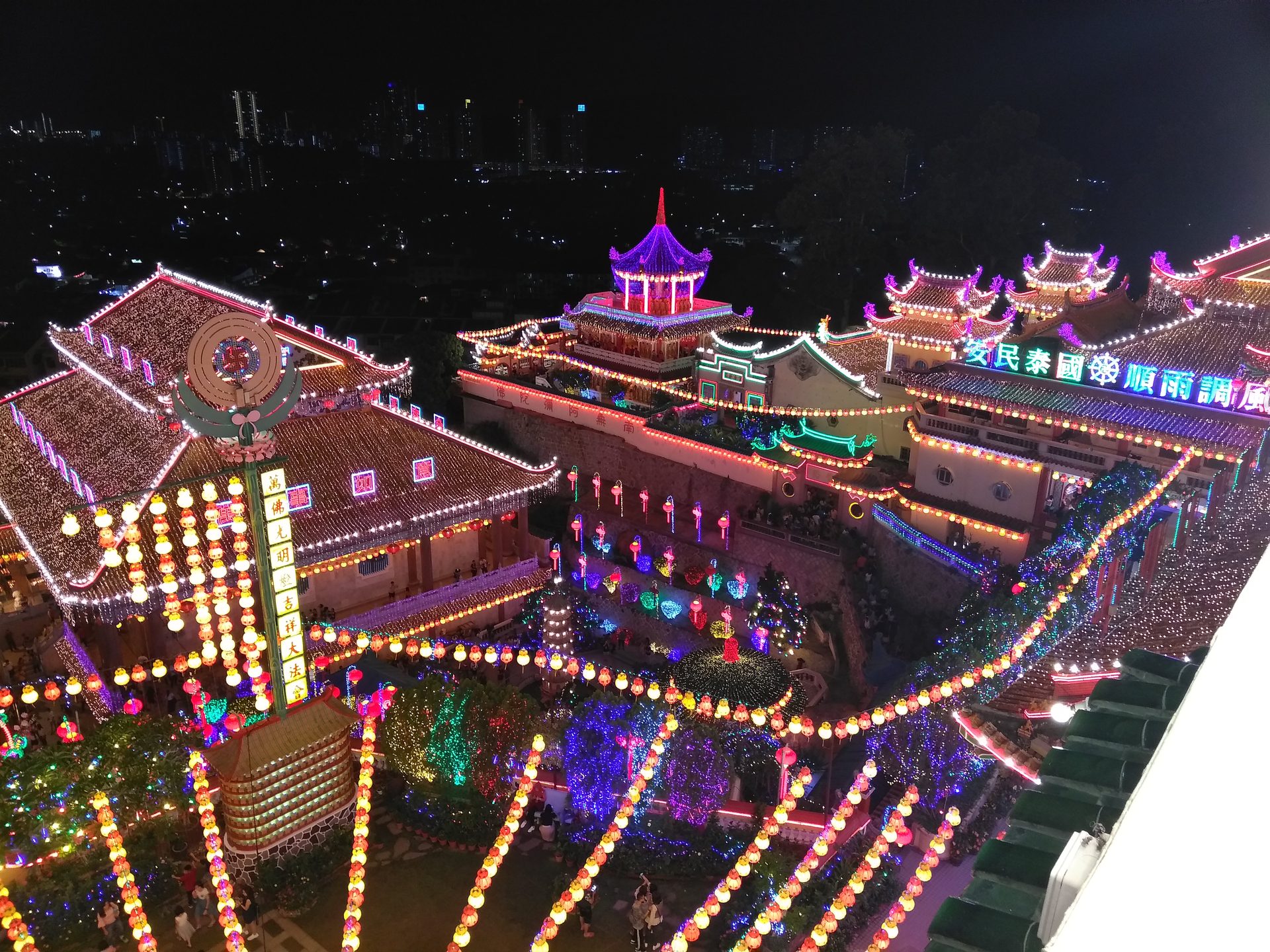
Start the second day out of the old town, at Air Itam, and do the island's two giants in the order that beats the crowds. Kek Lok Si, the Temple of Supreme Bliss, climbs its hillside in terraces: halls, gardens, the seven storey Pagoda of Ten Thousand Buddhas, and above it all the great bronze statue of Guanyin, the Goddess of Mercy. It is among the largest Buddhist temple complexes in Southeast Asia, entry to the grounds is free, and the pagoda and the incline lift carry small charges paid on the spot. Give it the morning cool and at least ninety minutes, and eat the Air Itam assam laksa at the market below it on the way out, as generations of temple visitors have done.
Above Air Itam rises Penang Hill, Bukit Bendera, reached by the funicular railway from its lower station nearby. The summit stands at 833 metres, the air up there is noticeably cooler, and the view runs over George Town, the strait and the mainland. The Habitat's canopy walkway, up in the rainforest at the top, is the worthwhile extra. The funicular queues are the day's one real bottleneck, worst on weekends and holidays, and the fast lane ticket exists for exactly that reason.
The half day tour that pairs the temple and the hill exists because the pairing is the island's classic morning, and it solves the funicular queue and the Air Itam logistics in one booking.
Kek Lok Si and Penang Hill half day tourvia Klook · affiliate link
Spend the last afternoon back in the core, slower: the Pinang Peranakan Mansion's gilded rooms if the Blue Mansion whetted the appetite, coffee in a shophouse cafe on Lebuh Cannon, the Chowrasta Market for nutmeg and biscuits to carry home, and a final walk down Lebuh Armenian as the day cools. Sleep inside the heritage zone if you can. The town at seven in the morning, before the day trippers, with the kopitiams opening and the temples sweeping their steps, is the version of George Town that two days exists to give you.
Stay in Penang (George Town)via Trip.com · affiliate link
More reading on the articles page, or go straight to the events calendar.
Noteworthy events direct to your inbox.
Get what’s noteworthy for the weekend and beyond every Wednesday in your inbox.